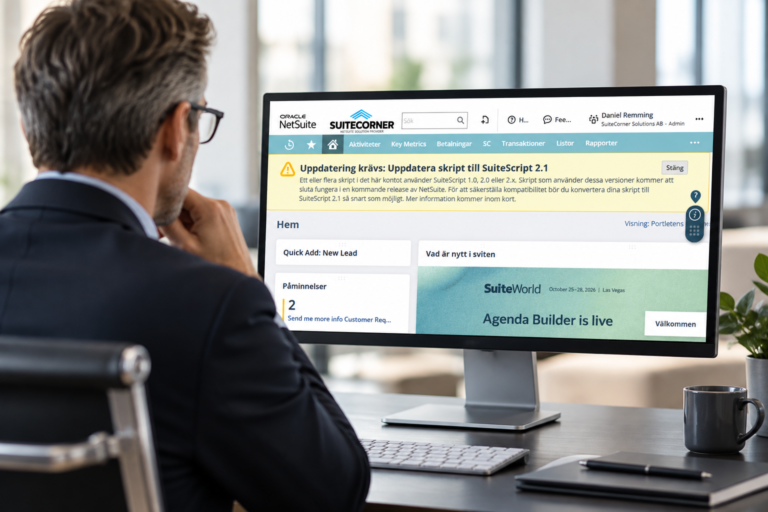
What is a cloud ERP system?
Digitalization and increasing demands for flexibility are leading many companies to review their ERP systems. One question that often comes up during this process is whether the system should be installed locally or cloud-based.
Cloud ERP systems have become an increasingly common choice for companies looking to bring finance, operations and business data together in one unified platform.
But what does a cloud ERP system actually mean, and why are more organizations choosing this type of solution?
What is a cloud ERP system?
A cloud ERP system is an ERP solution that is hosted and maintained in the vendor’s cloud infrastructure instead of being installed on the company’s own servers.
This usually means that the system:
- is accessed through a web browser or internet connection
- is maintained and updated by the vendor
- stores data in the cloud
- allows users to work from different locations
Many organizations begin their ERP journey by first understanding how to choose the right ERP system and identifying the needs of their business.
The difference between on-premise systems and cloud ERP
Traditionally, ERP systems have been installed locally within a company’s own IT environment. This model often means the organization is responsible for maintenance, updates and technical infrastructure.
A cloud ERP system works more like a service where the vendor manages operations and system updates.
This means, among other things, that:
- updates happen continuously
- the system can be accessed from multiple offices or countries
- internal IT teams do not need to manage servers and infrastructure
For many companies, the cost model is also an important factor when evaluating new ERP systems. That is why many businesses begin by exploring ERP system costs before moving forward in the process.
Common features in cloud ERP systems
Cloud ERP systems often include the same core functionality as traditional ERP systems, but within a more integrated platform.
Examples of functionality include:
- financial management and accounting
- order and invoice management
- inventory and purchasing
- CRM and customer management
- reporting and analytics
- integrations with other systems
By bringing multiple functions together in one system, organizations can work more data-driven and gain better visibility across the business.
Scalability as the business grows
One important advantage of cloud ERP systems is that they are often built to scale together with the organization.
As companies grow, new needs may arise, such as handling:
- more users
- multiple legal entities
- international operations
- multiple currencies
Cloud ERP systems are often designed to support these scenarios without requiring the organization to build new technical infrastructure.
One example of a cloud ERP system is NetSuite, which is used by companies across many industries.
Integration with other systems
Cloud ERP systems often offer APIs and integration capabilities that make it possible to connect different systems and automate information flows.
This can contribute to more connected processes and less manual work.
When can a cloud ERP system be the right choice?
For organizations that are growing, operating internationally or looking to bring multiple business processes together in one system, a cloud ERP solution can be a natural step in their digital transformation journey.
Companies comparing different ERP solutions may also want to understand how systems differ in terms of functionality and architecture. One example is comparing Monitor and NetSuite, where differences in capabilities and system structure become more apparent.
Want to learn more about cloud ERP systems?
Choosing an ERP system impacts many parts of the business, from finance and reporting to inventory management and operational processes.
SuiteCorner helps companies analyze their needs and implement NetSuite, a cloud ERP system that brings critical business functions together in one unified platform.
Contact SuiteCorner to learn how a modern ERP system can support your business and future growth.